


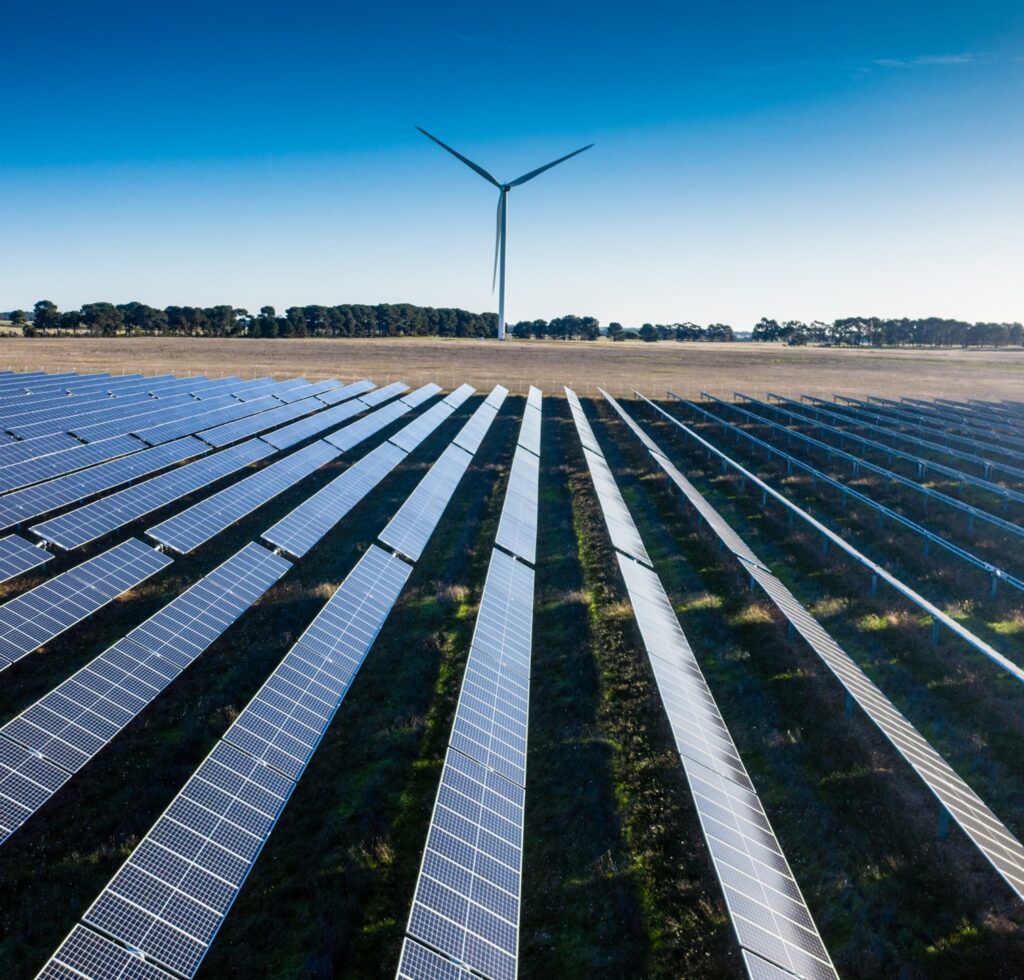
Our region has always been at the forefront of energy innovation. Australia’s first wind farm was built in Esperance in 1987. Isolation and remoteness have required our communities and industries to innovate, to get ahead.
Parts of the Goldfields region, including Kalgoorlie-Boulder, are serviced by the Western Power South-West Interconnected System (SWIS). We are at the “edge of the grid”, which creates dips and surges in energy, leading to an inconsistent supply and power interruptions.
The State Government has been working hard to change this with a number of priorities announced to support new and innovative energy infrastructure. This includes projects such as the Goldfields Regional Network (GRN) concept – a new common use transmission network that would connect world-class renewable resources in the Northern Goldfields to Kalgoorlie-Boulder and local communities.
Planning for the GRN is well underway and GEDC has contributed towards community engagement with our stakeholders on this project, across the region. As with all energy projects, there’s more than just the energy benefits to be realised, and part of our role has been to help maximise the economic and social benefits that could be leveraged through new partnerships with Aboriginal organisations and local governments, employment and business outcomes through construction and social benefits to remote communities with more reliable and secure energy supplies.
Our region is also pioneering energy innovation with the State’s $150 million commitment toward installing Australia’s largest vanadium battery in Kalgoorlie-Boulder. The Kalgoorlie Vanadium Battery Energy Storage System (VBESS) will serve as a substantial backup generator for the region, helping to sustain more reliable supply to industry and community.
Home to Curtin University and the WA School of Mines, Kalgoorlie-Boulder is the perfect location for this new vanadium project, designed to support the development of WA’s emerging battery manufacturing and vanadium mining sectors.
As a global mining and manufacturing hub, with a combined $31 billion-dollar economic output[i] energy in large volumes is required for all touch points of the resources sector in our region from exploration, extraction and processing, to the accompanying service industries. Additionally, fuel and fertiliser inputs are essential for the regions’ $984 million agricultural and fishing sectors[ii], for freight logistics, transportation, and tourism.
The recent global fuel disruption has highlighted the volatile nature of supply chains for valuable resources and the need for prioritising new and innovative energy solutions.
Our region is playing a role in immediate solutions to these supply challenges, with storage solutions being developed in Kalgoorlie-Boulder and Esperance as part of the State Government’s strategy to secure fuel for Western Australia. But we’re also playing an important longer-term role as part of new energy solutions that benefit all Western Australians and create the jobs of the future for the people of our region.
There are many other game-changing investments underway in areas of our region outside the SWIS. Many remote communities across our region are using a combination of renewable energy and diesel power. Significant innovation is underway to upgrade remote solutions and provide more reliable energy to remote communities in our region.
You may not be aware that the southern part of our region is already a leading producer of crops for biofuel production, with local canola exports through Esperance Port to Europe, growing in recent years.
WA is the dominant Australian state for canola production, accounting for more than half of the nation’s annual production and WA canola is particularly renowned for its high oil content. More than 70% of total canola exports; more than $2 billion per year; are headed for the European biodiesel market[iii].
The State is currently developing an Advanced Biofuels Strategy that will create further opportunities for economic diversification for local biofuels industry. I look forward to the opportunities this strategy and the initiatives of the Australian Government’s Cleaner Fuels Program can deliver for our region, and to working with industry and project proponents to develop this emerging sector, and the new jobs and skills that come with it, for the people of the Goldfields-Esperance region.
For the GEDC, preparing for supply chain resilience and climate change transition underpins the economic diversification focus of our strategic plan. Over the past five years there has been a wave of renewable and new energy investments across the region, creating demand for new skills and technology. As a result, local training for trades working in the energy sector, such as electricians, is in strong demand, with additional skill sets being added to ensure future proofing for the industry.
Coupled with an accelerating advanced manufacturing sector, opportunities to build and supply components and services for energy is creating another area for growth in the Goldfields-Esperance region. Our GEDC Local Content and Regional Economic Development Grants programs are helping to connect local suppliers with new opportunities for major projects and support businesses to accelerate technology uptake for enhanced productivity.
There is no part of our region’s economic growth that is not impacted by energy security and reliability. The GEDC has a key role to play in this growth, helping to coordinate across infrastructure agencies and attract investment to the region.
We must understand and inform the enabling infrastructure required to support the energy transition, such as industrial land and skilled workforce, and keep abreast of how the community is adapting to dynamic change and growth in the region. And importantly, how do we best collaborate to optimise the benefits from the energy transition and position our region for a prosperous future for all.
[i] REMPLAN (2026) and Small Area Labour Markets (2025 Release 1 Data)
[ii] REMPLAN (2026) and Small Area Labour Markets (2025 Release 1 Data)
[iii] Department of Primary Industries and Regional Development, CSIRO Research (2026)